Keeping Immersion Cooling Safe.

The Critical Role of Permittivity and Conductivity.

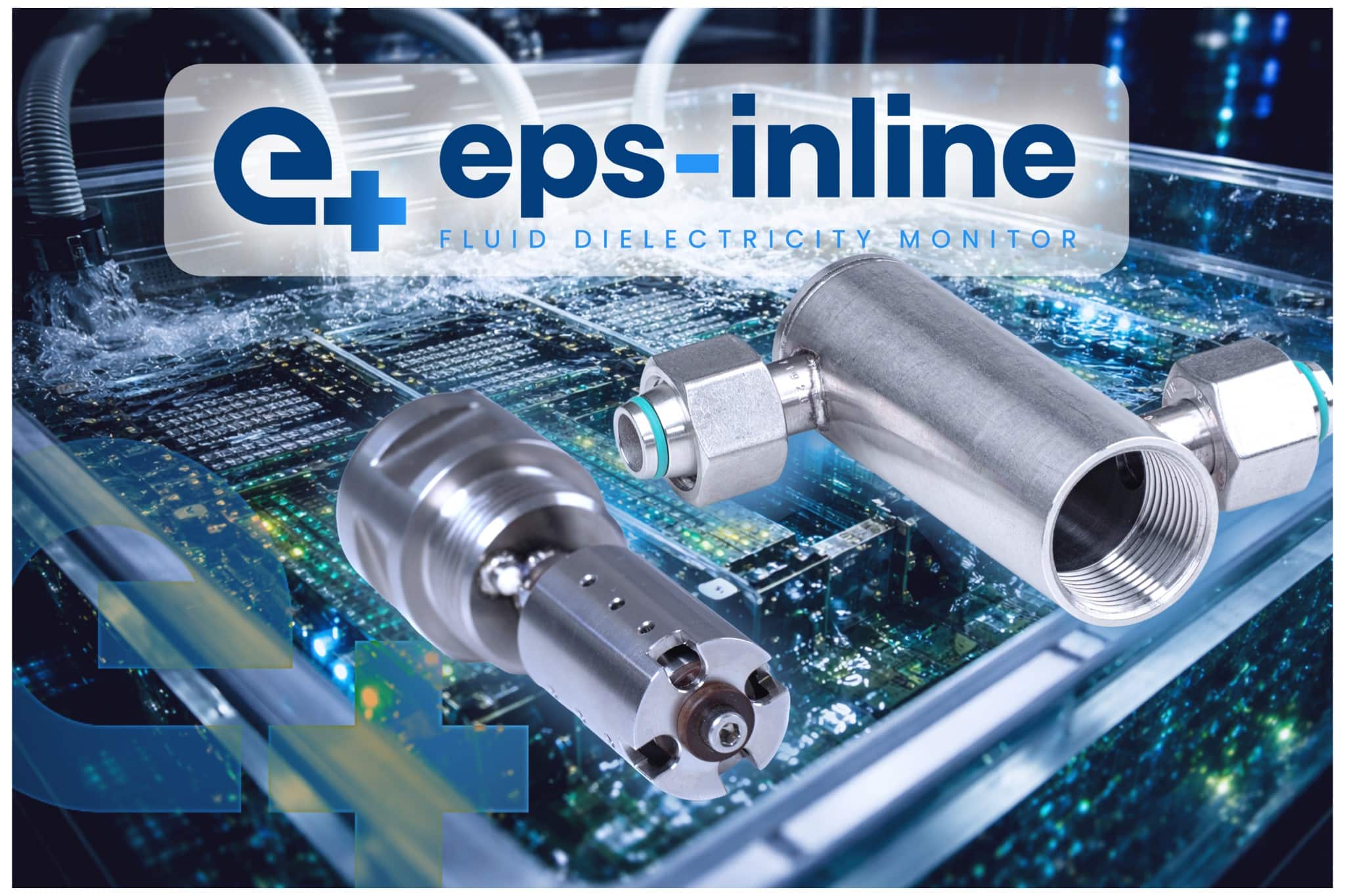
As artificial intelligence continues its rapid expansion, immersion cooling of servers is evolving just as quickly — from a niche solution into a serious alternative for high-performance data centers. In this approach, electronic components are directly submerged in specialized cooling liquids, known as immersion cooling fluids, which must be both thermally efficient and electrically safe. Two physical properties are particularly critical in this context: relative permittivity and specific electrical conductivity.

Precision in dielectric testing requires accurate temperature control.

Perfect temperature – precise measurement thanks to a strong partnership.

When our long-standing partner JULABO writes about precise temperature control technology, we at flucon naturally prick up our ears – after all, their high-precision temperature control devices have been an integral part of our own measurement systems for many years. Their current article hits the mark: If you want to measure precisely, you need to control the temperature with pinpoint accuracy.

Because, especially in the electrical characterization of lubricants – for example, through conductivity measurements or dielectric spectroscopy – temperature often determines the meaningfulness of the results. Even the smallest deviations can cause significant differences in the measurement results. For us at flucon, it’s clear: Temperature control is not an accessory – it is the heart of our measurement technology.

Introducing Our Film Thickness Feature.

Newly patented: lubrication analysis with flucon’s E-Lub Tester.

May we introduce? Our E-Lub Tester is the world’s first fully automated dielectric tribometer – and now also equipped with a patented lubricant film thickness feature.

The E-Lub Tester enables precise measurement of the impedance of a moving rolling bearing filled with a lubricant sample under variable operating conditions. Speed, axial load, and lubricant temperature can be varied individually or in combination to determine the resulting lubrication condition.

Ready for market – in only eight weeks.

In-situ oil aeration measurement with the all-new CGS In-Situ.

We are thrilled to announce a groundbreaking innovation from the flucon team: Our trusted inline aeration sensor CGS has received a cutting-edge upgrade – introducing the CGS In-Situ!

This new sensor variant enables direct in-situ measurement of air concentration (i.e., the gas phase percentage in vol%) by means of  a compact G 3/4″ screw-in module. The CGS In-Situ opens up entirely new possibilities for precise monitoring of aerated fluids – especially in applications where space, flexibility, and easy integration are key.

Taking the Dual Approach to Minnesota.

flucon team attends the STLE Annual Meeting in the USA.

The annual meeting of the Society of Tribologists and Lubrication Engineers took place from May 19 to 23. Over 1,200 experts in tribology and lubrication technology gathered in Minneapolis, Minnesota, to discuss the latest developments and challenges in their industries.

As a new member of STLE, our team was keen to attend the 78th edition of the renowned event in the north-east of the USA. flucon CTO Simon Hausner also gave a presentation on our Dual Approach to electrical lubricant testing.