 deutsch
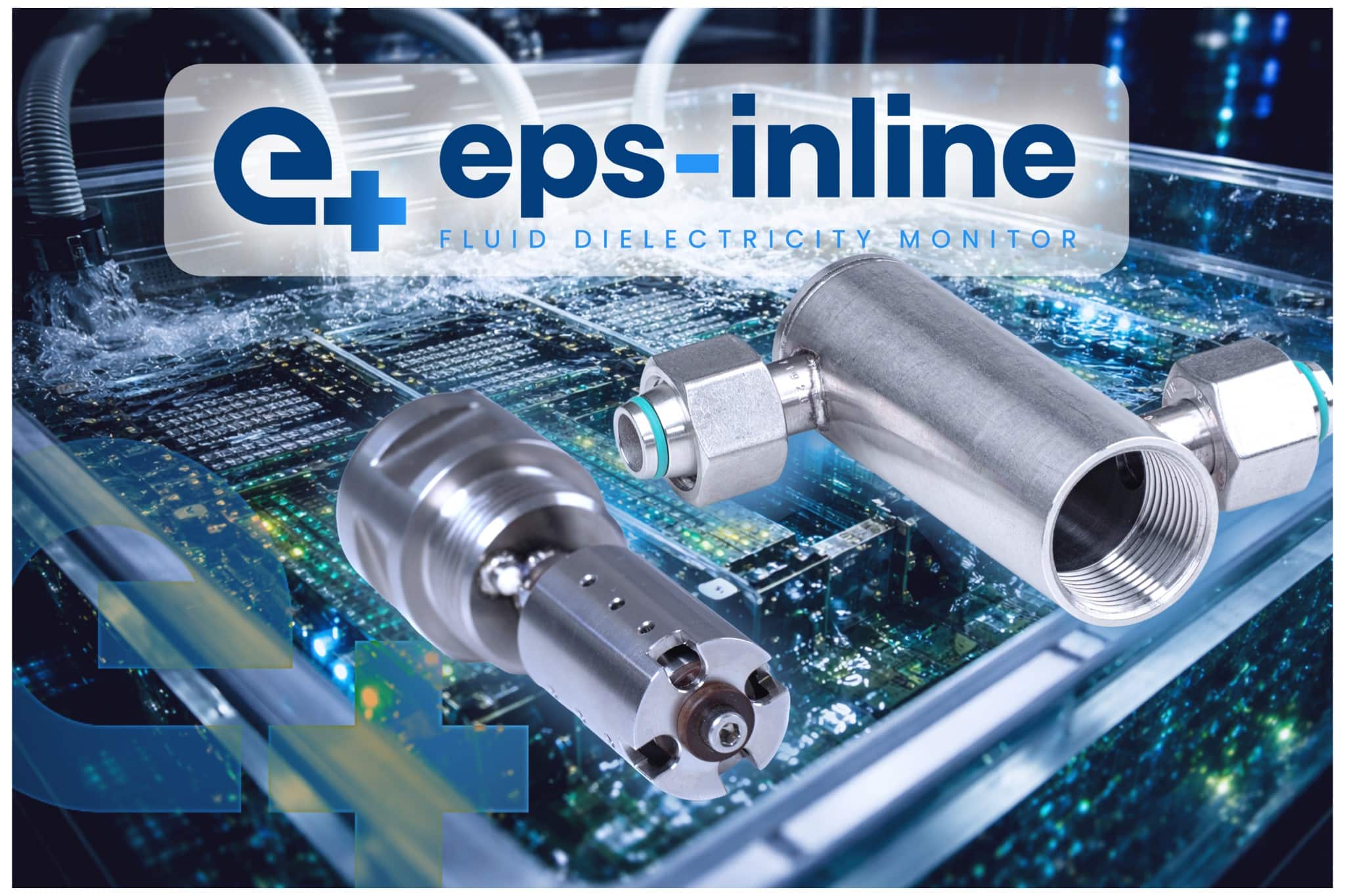
The Critical Role of Permittivity and Conductivity.
As artificial intelligence continues its rapid expansion, immersion cooling of servers is evolving just as quickly — from a niche solution into a serious alternative for high-performance data centers. In this approach, electronic components are directly submerged in specialized cooling liquids, known as immersion cooling fluids, which must be both thermally efficient and electrically safe. Two physical properties are particularly critical in this context: relative permittivity and specific electrical conductivity.
Relative permittivity describes how strongly a liquid dielectric influences an electric field and plays a crucial role in signal behavior and parasitic capacitances in immersion-cooled systems. Excessively high permittivity can promote unwanted coupling effects, while low polarizability may offer advantages in high-frequency applications.
At the same time, specific electrical conductivity and dielectric dissipation factor (tan δ) are reliable measures of electrical safety. Ideally, immersion fluids are highly insulating to prevent short circuits in electronic components. In practice, however, these properties change over time—due to aging, contamination, or material leaching—and must therefore be continuously monitored.
 With the growing industrial adoption of immersion cooling, the need for standardization is also increasing. The Open Compute Project (OCP) plays a key role in this development. Initial conventions and specifications define requirements for chemical stability, material compatibility, and, in particular, the electrical properties of cooling fluids. It becomes clear that electrical conductivity must not exceed certain thresholds in order to ensure operational safety. For measured DDF, the maximum is 0.05. At the same time, recommendations for measurement methodologies and in-service monitoring are being established.
Although relative permittivity is less explicitly restricted than conductivity, it is gaining importance due to its influence on signal integrity, electromagnetic compatibility, and hardware design. OCP thus implicitly highlights the necessity of not only verifying initial fluid properties but also monitoring them during operation—an aspect that has often been underestimated.
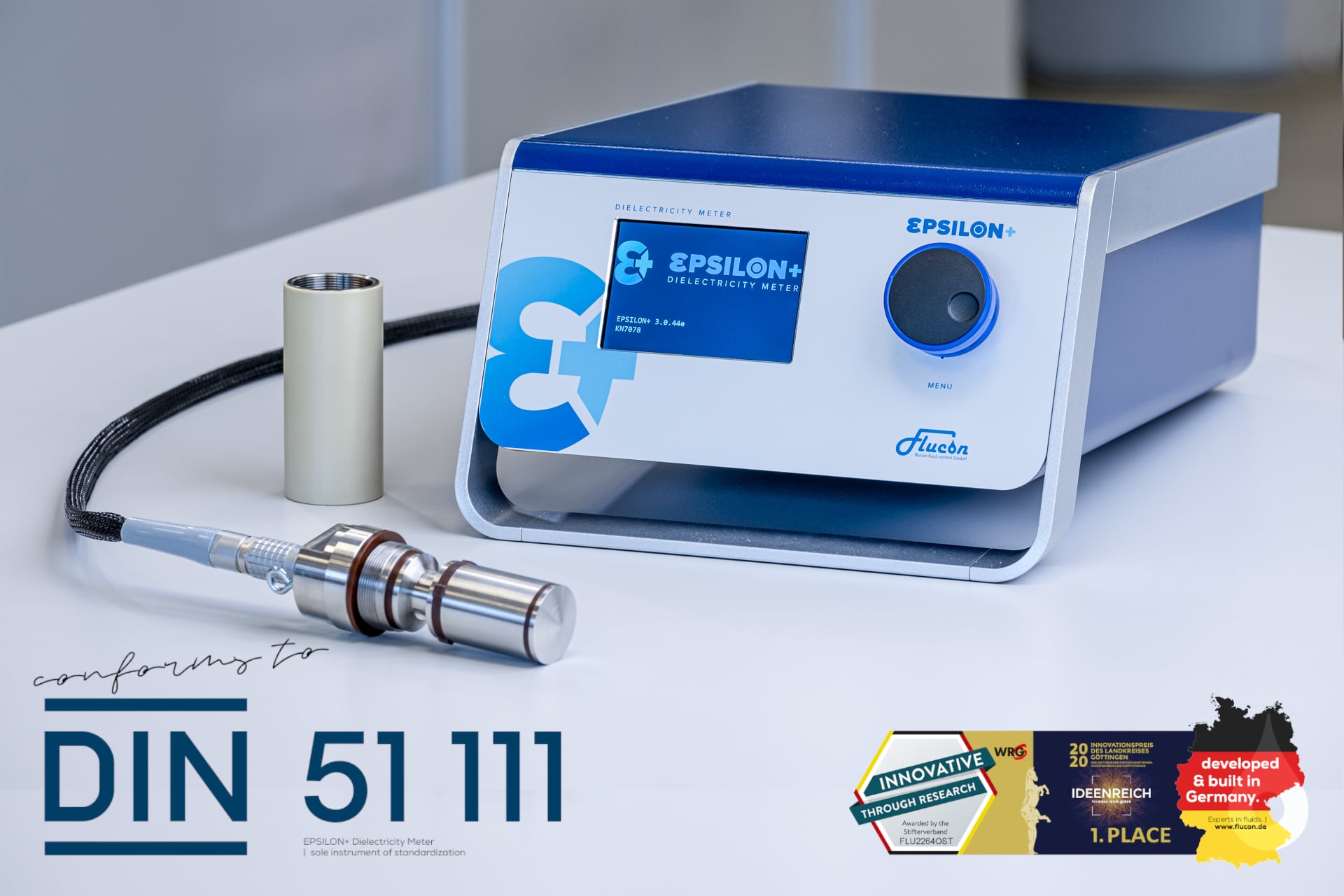
Against this backdrop, precise measurement solutions are becoming increasingly important. In laboratory environments, flucon’s standardized system EPSILON+, compliant with DIN 51 111 and E DIN 51 113, enables detailed characterization of immersion fluids. It allows for the simultaneous determination of relative permittivity, specific electrical conductivity, and dielectric loss factor across a wide temperature range. This makes it possible not only to evaluate new fluids but also to investigate aging processes. This capability is particularly valuable for manufacturers and datacenter operators seeking to understand and optimize the long-term stability of their cooling media. Reproducible measurement data help identify trends and define threshold values that can later serve as references in field operation—bridging the gap between research, development, and practical application.
However, even more critical for real-world operation is continuous monitoring directly within the system.
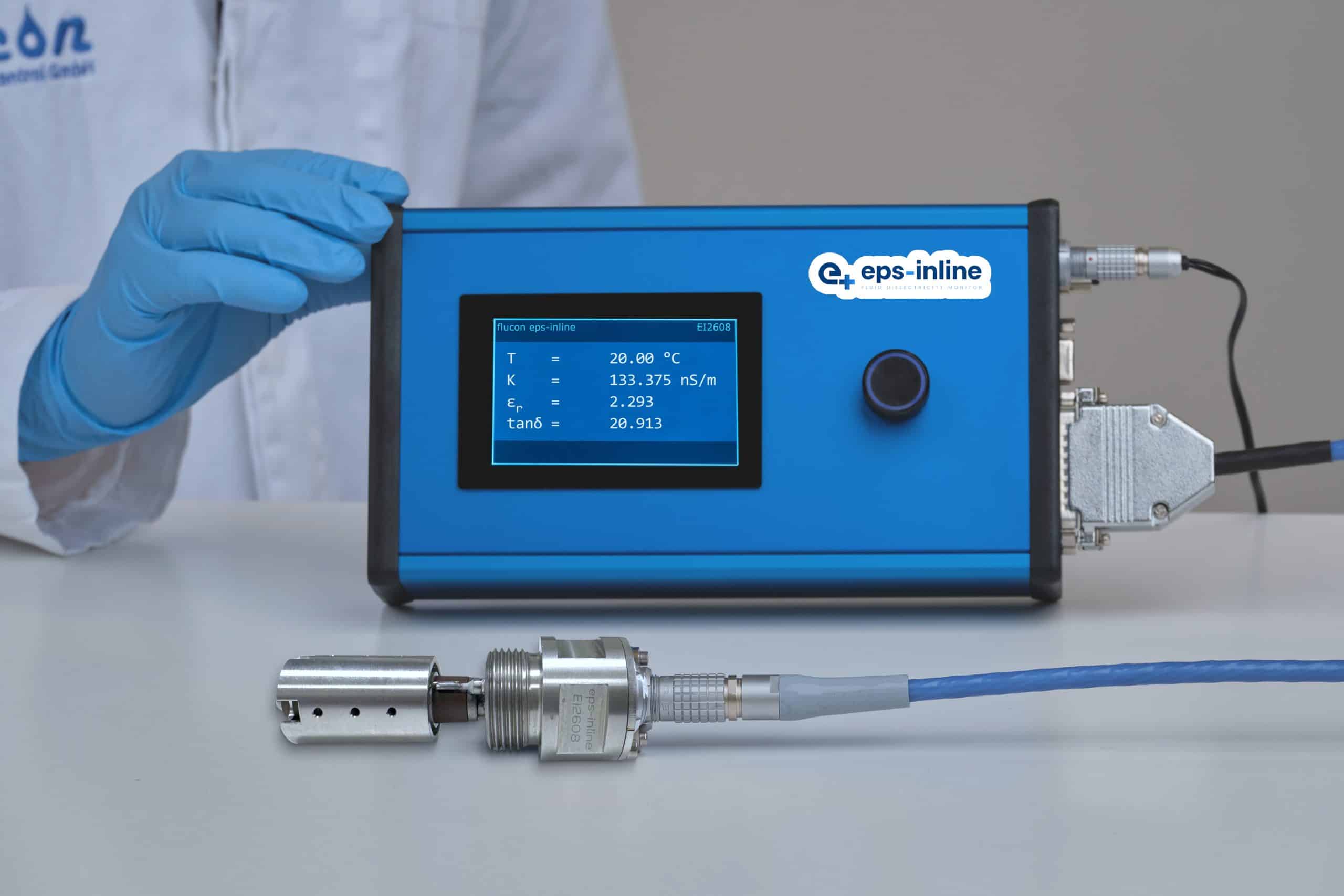
This is where an inline-capable sensor such as our eps-inline comes into play. As a screw-in process monitor with a G3/4″ external thread, it can be integrated directly into the cooling circuit or even into the immersion tank itself, providing real-time data on the electrical properties of the fluid. This enables early detection of changes caused by contamination, moisture ingress, or material degradation.
For data center operators, this new technology represents a significant gain in operational reliability: instead of relying solely on periodic laboratory analyses, critical conditions can be identified immediately and appropriate countermeasures can be taken. At the same time, it opens up opportunities for condition-based maintenance and data-driven optimization of cooling processes.

In combination with OCP recommendations, this creates a holistic approach in which specification, measurement, and monitoring are closely aligned — allowing immersion cooling of servers, supported by flucon’s sensor technology, to take another step toward industrial maturity.
Feel free to contact us for more information!
Dear Flucon,
We are currently evaluating your probe for monitoring the electrical permittivity of liquids and would like to request some additional technical information.
In particular, could you please let us know:
At which frequency the permittivity measurement is performed?
Whether the measurement frequency is fixed or if it can be selected or configured by the user?
This information will help us assess the suitability of the probe for our specific application.
Thank you in advance for your support. We look forward to your reply.
Hi Paolo,
Many thanks for your message and for this fantastic question!
With eps-inline the relative permittivity is measured at 100 kHz as per the DIN 51 111 standard (in contrast to specific electrical resistivity and conductivity which are determined at only 20 Hz).
The test frequency can be adjusted through the device menu but we recommended to keep it as is since 100 kHz are also used for the factory calibration.
Additionally there are multiple options e.g. to run a frequency sweep (Bode plot) to find potential frequency dependencies of the dielectric constant up to 200 kHz by means of our fluconEPS PC software.
We know that there is a chance that high frequencies – in particular in the GHz range, where some of the relevant cooled equipment operates – may further affect the performance of the dielectric.
To assure data integrity based on permittivity monitoring our team is currently conducting further investigations by means of a high-frequency VNA to find out if our 100 kHz readings are representative for the single-phase liquids.
Stay tuned for further news!
Happy to discuss our testing capabilities with you in a web session, too – feel free to shoot me an e-mail.
Simon
—
Simon Hausner, CTO
shausner@flucon.de